Addiction recovery is a deeply personal journey. It involves healing the mind, body, and spirit—and spending time in nature is emerging as a powerful complement to traditional treatment. While therapy, medication, and support groups remain essential, another transformative tool often goes overlooked: the healing power of the outdoors.
Research shows that spending time in nature reduces stress, boosts mood, and improves physical health. When used intentionally, time outdoors can become a vital part of healing. Whether it’s a walk in the woods, a hike through the mountains, or quiet time near a river, nature offers space for reflection, peace, and growth—like a patient friend who listens without interrupting.
This article explores how nature supports recovery and how wilderness therapy programs are helping people rebuild their lives—one step at a time.
Why Does Nature Matter in Addiction Recovery?
Addiction disconnects people from themselves, others, and the world around them—like static on a radio that drowns out the signal. Nature helps restore that connection in profound ways, clearing the noise so you can hear yourself again.
Spending time in natural environments can:
Reduce anxiety and depression
Lower blood pressure and heart rate
Boost immune system function
Improve focus and sleep quality
Encourage mindfulness and presence
According to a 2019 study in Frontiers in Psychology, being in nature for only 20 minutes can meaningfully lower cortisol, the hormone primarily responsible for stress.
For someone in recovery, this shift in the nervous system can be the difference between feeling overwhelmed and feeling grounded. It’s like turning down the volume on the chaos inside your head.
The bottom line: Nature acts as a natural stress-reducer, helping the body and mind return to balance during the vulnerable early stages of recovery.
What Is Wilderness Therapy?
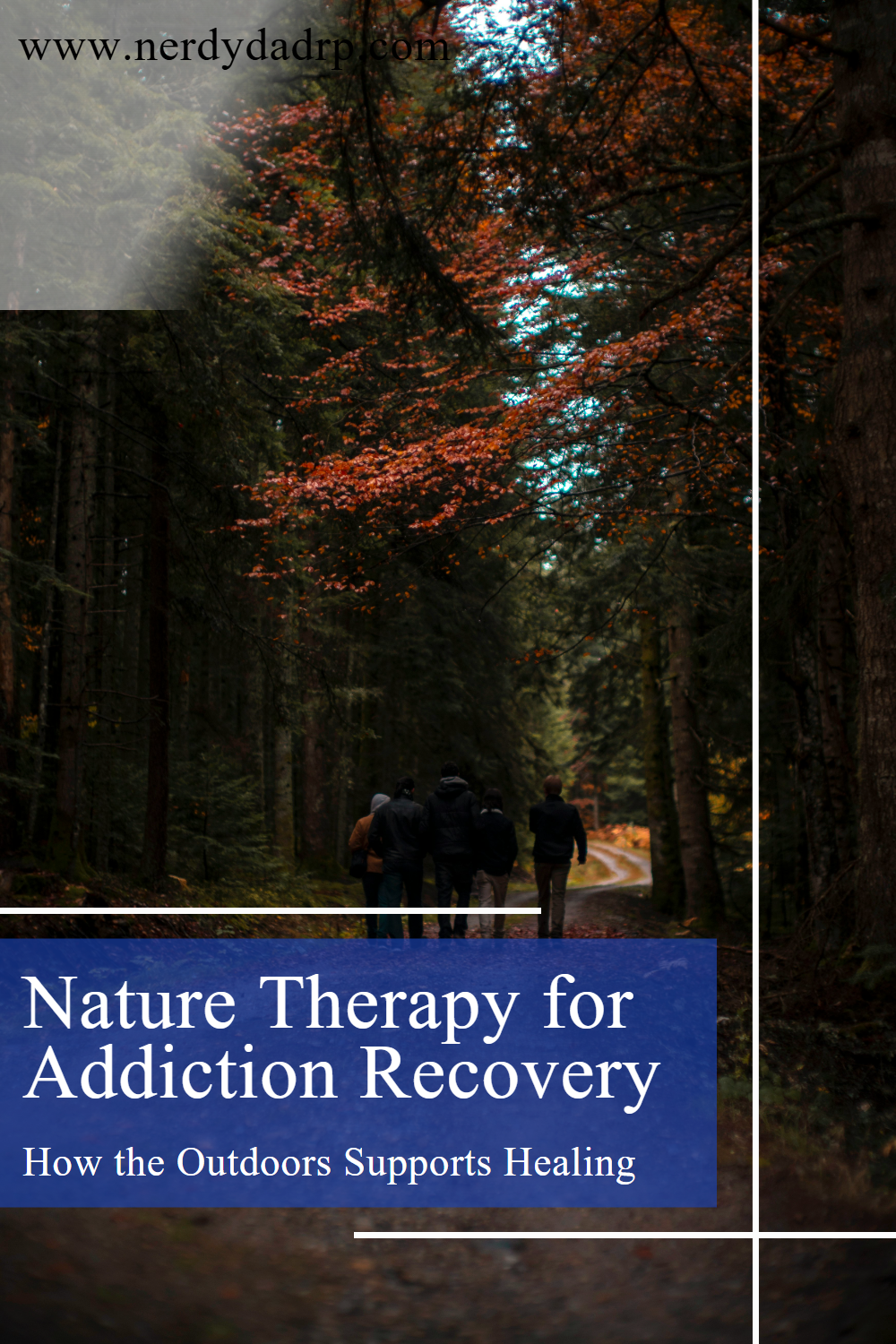
Outdoor therapy—sometimes called wilderness therapy or adventure therapy—is a therapeutic approach that uses nature as part of the healing process. Think of it as therapy without walls, where the forest becomes the counseling room and the trail becomes the pathway to insight.
It combines physical activity with guided therapy, emotional reflection, and group support.
This might include:
Hiking through forests or mountains
Camping under the stars
Team-building exercises
Mindfulness practices outdoors
Journaling or storytelling around a campfire
Licensed therapists lead participants through activities while helping them process emotions, develop coping strategies, and rebuild confidence.
Important distinction: Outdoor therapy isn’t about extreme survival challenges—it’s about healing through connection with nature and others in a supportive, structured environment.
How Does Time in Nature Reduce Stress and Cravings?
Cravings often stem from stress or emotional discomfort—they’re like warning lights on a dashboard, signaling that something underneath needs attention. Time outdoors provides a calming environment that naturally reduces the fight-or-flight response, helping you address what’s underneath instead of just reacting to the alarm.
Fresh air, sunlight, and green space offer sensory relief that helps calm the mind and body. The natural sounds, sights, and smells activate the parasympathetic nervous system—the body’s “rest and digest” mode—which counteracts the stress response that often triggers relapse. It’s like giving your nervous system permission to exhale.
The takeaway: Regular time in nature measurably reduces both stress and cravings, creating a biological foundation for sustainable recovery.
Can Nature Help With Mindfulness and Emotional Balance?
Yes—and research suggests it’s one of nature’s most powerful benefits for people in recovery.
Being outdoors encourages us to slow down and pay attention. The sounds of birds, the feel of the breeze, the smell of trees—these sensory details bring us into the present moment, which is the foundation of mindfulness. It’s harder to spiral into yesterday’s regrets or tomorrow’s worries when a hawk is circling overhead and the wind is in your face.
Nature is a natural teacher of mindfulness. When paired with guided practice or simple grounding techniques, it becomes even more powerful for emotional healing.
Try this: Practice “5-4-3-2-1 grounding” outdoors—name 5 things you see, 4 you can touch, 3 you hear, 2 you smell, and 1 you taste. This anchors you in the present and interrupts anxious or craving-based thoughts like pulling the emergency brake on a runaway train.
What Are the Mental Health Benefits of Outdoor Therapy?
Time in nature offers multiple psychological and emotional benefits beyond stress reduction:
It Builds Self-Esteem and Confidence
Addiction often damages a person’s self-worth, leaving them feeling like a broken version of who they used to be. Outdoor therapy challenges individuals to set goals, face fears, and accomplish tasks—whether it’s building a fire, completing a challenging hike, or working as a team.
These small wins build confidence like stacking stones into a cairn—each one matters, and together they mark the path forward.
Participants often say things like, “I didn’t think I could do it—but I did.” This sense of accomplishment transfers to other areas of life, including staying sober.
It Supports Connection and Reduces Isolation
Recovery can feel lonely, like being on an island while everyone else is on the mainland. Wilderness programs often take place in groups, creating opportunities for shared experience, mutual support, and healthy communication.
Nature breaks down walls. Without the distractions of screens or daily stressors, people connect more easily. Group hikes, campfire talks, or even silent walks foster trust and understanding. There’s something about sweating up a mountain together or watching the same sunset that builds bridges words alone can’t construct.
It Creates Routine and Structure
Many people in early recovery struggle with structure—days can feel like drifting without an anchor. Therapeutic outdoor programs often include:
Being in nature also resets the body’s circadian rhythm, which improves sleep quality—a key factor in emotional stability and relapse prevention. When you rise with the sun and rest when it sets, your body remembers its natural rhythm.
A Story: Healing in the Woods
Jake, 29, attended a 30-day nature-based recovery program after years of struggling with alcohol addiction.
“At first, I didn’t think hiking could help me. But something changed out there. The silence, the trees—it gave me space to breathe. I started to feel again. And with each mile I walked, I left something behind: the guilt, the fear, the shame. It was like shedding weight from a backpack I didn’t realize I’d been carrying. Nature gave me hope when I didn’t have any.”
Stories like Jake’s are common in nature-based recovery programs. The outdoors often becomes a mirror—showing us our resilience, our struggles, and our strength. The trail doesn’t lie to you. If you’re tired, you feel it. If you’re stronger than you thought, you discover it. And that honesty is part of the healing.
How to Bring Nature Into Your Recovery
You don’t need to join a formal program to benefit from time outdoors. Here are simple, evidence-based ways to bring nature into your daily life:
Take a Daily Walk Outside
Even 20 minutes can lower stress hormones and improve mood. Choose a park, trail, or quiet neighborhood street lined with trees. Think of it as a daily reset button for your nervous system.
Practice Mindful Breathing Outdoors
Sit quietly in a park or backyard. Focus on your breath and what you hear, see, and feel. Let the environment do the heavy lifting—you just need to show up and pay attention.
Journal in a Natural Setting
Bring a notebook to a quiet outdoor spot. Write about how the environment makes you feel, what you’re grateful for, or what you’re working through emotionally. Nature has a way of loosening the knots in your thinking.
Try “Earthing” or Grounding
Walk barefoot on grass, soil, or sand. Research suggests this practice reduces inflammation, improves sleep, and promotes emotional balance—all critical for recovery. It’s simple, free, and surprisingly powerful.
Watch a Sunrise or Sunset
These moments create natural stillness and reflection, like the world pausing to take a breath. They’re perfect for setting daily intentions or expressing gratitude, two practices strongly linked to recovery success.
Volunteer for Outdoor Conservation Projects
Giving back to nature while spending time outdoors combines purpose and physical activity—both beneficial for long-term recovery. Planting trees or cleaning trails can feel like healing the earth while healing yourself.
Final Thoughts
Recovery is not just about removing something harmful—it’s about replacing it with something healing. Nature offers that healing. It’s always there, like a steady companion who shows up whether you’re ready or not. It doesn’t judge, rush, or demand.
Whether through a structured wilderness program or a simple walk among trees, time in nature can reduce stress, ease cravings, improve mental health, and help people rediscover joy, peace, and connection. Nature reminds you that growth takes time, that storms pass, and that roots grow deeper in rough soil.
You don’t need to go far or do much. Just step outside. Take a breath. Let the earth help you heal.
What has been your experience with nature during recovery, or what’s one small outdoor practice you’d like to try this week?
Common Questions About Nature and Recovery
Does nature therapy work as a standalone treatment?
No—research suggests it works best as a complement to evidence-based treatments like counseling, medication-assisted treatment, and support groups. It enhances recovery but shouldn’t replace professional care.
How often should someone in recovery spend time in nature?
Studies show benefits from as little as 20 minutes daily. For structured programs, weekly sessions or multi-day wilderness retreats show significant improvements in stress, mood, and cravings.
What’s the difference between outdoor therapy and wilderness therapy?
Outdoor therapy is a broad term for any therapeutic practice that incorporates nature. Wilderness therapy specifically refers to structured, multi-day or residential programs led by licensed therapists in remote natural settings.
Can nature help with co-occurring mental health conditions?
Yes—research suggests time outdoors also reduces symptoms of anxiety, depression, PTSD, and trauma, which commonly co-occur with substance use disorders.
Is nature therapy accessible for people with physical disabilities?
Absolutely. Many practices—like seated meditation in a garden, wheelchair-accessible trails, or simply spending time near water—are fully accessible and equally beneficial.
Absolutely! Nature has a way of calming the mind and grounding us, which can be such an important part of recovery. I’m glad the article resonated with you—sometimes just spending time outdoors can make a real difference in the healing process.
Absolutely! That’s exactly what we explored in the article—how being in nature isn’t just calming, but actually supports recovery by reducing stress, improving mood, and giving a sense of connection. It’s amazing how much the outdoors can help the healing process!
That’s wonderful to hear! It sounds like your dream of becoming a master gardener and naturalist fits perfectly with the ideas in the article. Nature has such a powerful way of grounding us, reducing stress, and supporting healing—whether it’s through gardening, exploring trails, or simply being outdoors. Pursuing those passions could be an amazing way to support not just your own well-being, but also help others if you ever share your knowledge in nature therapy.












Leave a Reply