Toys are the heartbeat of childhood—sparking imagination, fueling learning, and keeping kids entertained for hours. But while they bring joy and adventure, they can also pose hidden dangers if not chosen and handled with care.
As a parent, ensuring your child’s toys are safe is like being the captain of a ship navigating through stormy waters—you need to stay vigilant and prepared. This guide will help you steer clear of toy hazards, pick the safest options, and maintain a secure play space.
Common Toy Hazards: Hidden Dangers in the Toybox
Not all dangers are obvious at first glance. Some toys may look harmless but can quickly turn into risks if misused or broken. Here are a few hazards to watch out for:
1. Choking Hazards: Tiny Troubles
Small parts can be like sneaky little bandits, slipping into tiny mouths and causing serious trouble. Be cautious with marbles, tiny figurine accessories, and small building blocks, especially around children under three.
A quick test? If a toy part can fit inside a toilet paper roll, it’s too small for little ones.
2. Strangulation & Suffocation Risks: The Silent Threats
Long cords, strings, or ribbons might seem harmless, but they can become strangulation hazards faster than you can say “tug-of-war.” Keep any cords on toys under 12 inches long.
Also, don’t let plastic packaging stick around—it can turn into a suffocation danger for curious explorers.
3. Sharp Edges & Points: Ouch!
Broken toys or poorly made ones may have sharp edges lurking like tiny daggers. Regularly check toys for cracks, splinters, or jagged corners to prevent cuts and scrapes.
4. Harmful Chemicals: The Invisible Danger
Not all toys are made with kid-friendly materials. Some older toys or cheap, unregulated ones may contain lead, BPA, or other nasty chemicals.
Stick with toys labeled as non-toxic and meet safety standards from trusted organizations like the Consumer Product Safety Commission (CPSC).
5. Battery-Related Risks: Tiny But Mighty Dangerous
Button batteries and lithium coin cells may be small, but if swallowed, they can cause severe internal injuries in record time. Always check that battery compartments are securely closed and out of reach.
6. Electrical Hazards: When Toys and Water Don’t Mix
Electric-powered toys can be fun but also dangerous if they meet water. Ensure all electric toys meet safety standards and are only used as intended.
Choosing Safe Toys: Your Parental Shopping Checklist
Buying safe toys doesn’t mean taking the fun out of the experience! Here’s how to make smart, safe choices:
Follow Age Recommendations: Toy labels aren’t just suggestions—they’re safety guidelines based on developmental stages.
Look for Safety Certifications: Check for labels from the CPSC or ASTM (American Society for Testing and Materials) to ensure toys meet safety standards.
Beware of Small Parts: If a toy comes with detachable small pieces, reconsider if it’s suitable for your child’s age.
Pick Non-Toxic Options: Always choose toys made from safe, BPA-free, lead-free, and non-toxic materials.
Go for Durable Construction: Sturdy, well-made toys last longer and are less likely to break into dangerous pieces.
Be Cautious with Magnets & Batteries: Avoid giving toys with powerful magnets or button batteries to younger children.
Creating a Safe Play Space: Where Fun Meets Safety
Once you have safe toys, setting up a secure play environment is just as crucial. Here’s how to make your child’s playtime worry-free:
Inspect Toys Regularly: Look for signs of damage and retire any toy that’s seen better days.
Store Toys Smartly: Use bins without heavy lids to prevent little fingers from getting trapped.
Supervise Playtime: Keep an eye on younger kids to ensure they’re using toys properly.
Teach Safe Play Habits: Encourage gentle play (which I’ve found can be a task if you have boys) to prevent toy breakage and possible injuries.
Secure Battery Compartments: Double-check that battery covers are tightly secured and out of reach of tiny hands.
What to Do in Case of Toy-Related Emergencies
Even with all precautions, accidents can still happen. Knowing what to do can make all the difference.
Choking: If a child is choking, perform the Heimlich maneuver or back blows (for infants). Seek emergency help immediately.
Swallowed Hazardous Objects: If a child swallows a button battery, magnet, or toxic substance, get medical help right away. Do not induce vomiting unless advised by a doctor.
Cuts & Wounds: Clean minor cuts with soap and water, apply a bandage, and get medical help for deeper wounds.
Strangulation or Suffocation: If a child is struggling to breathe, remove the object immediately and call emergency services if needed.
Final Thoughts: Play Safe, Stay Safe
Keeping playtime safe is like being a superhero for your child—always on the lookout for hidden dangers while ensuring their world stays full of fun and adventure.
By choosing the right toys, setting up a secure play area, and staying informed about safety risks, you can create an environment where laughter and imagination thrive without unnecessary risks. Stay alert, stay informed, and most importantly, let your child enjoy the magic of play—safely!
2 responses to “Toy Safety 101: A Parent’s Guide to Fun and Risk-Free Play”
Lauryn R
This is a very helpful and informative post, thank you so much for sharing. There are definitely a lot of things that you need to think about when babies and toddlers are in the house. Now that my kids are older, I still have safety habits from when they were younger that I will never lose.
Thanks so much for your kind words! I’m really glad you found the post helpful. It’s so true—those early safety habits really do stick with us, don’t they? Even when the kids grow up, it’s hard to un-train that sense of vigilance. Sounds like you’ve done a great job keeping your home safe through all the stages!


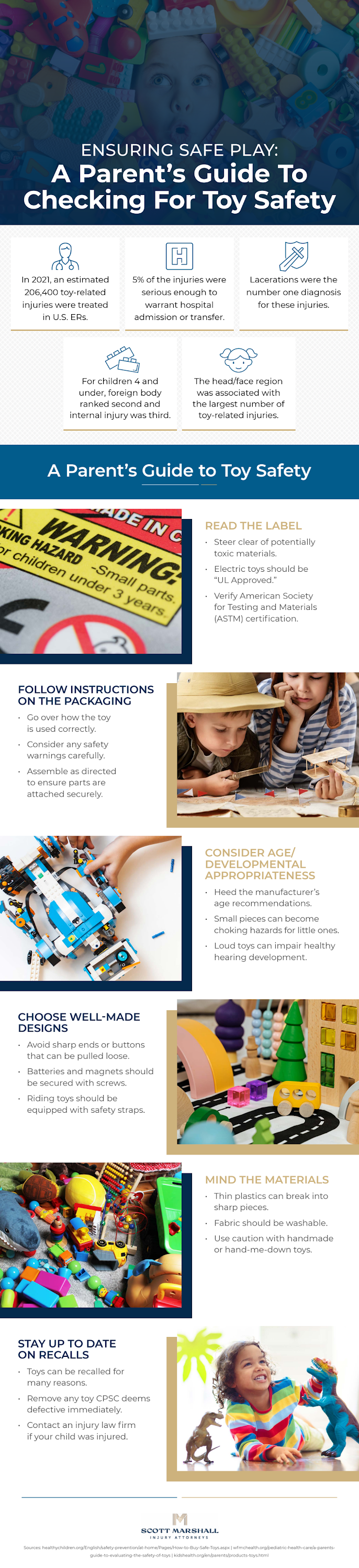 Infographic provided by Scott Marshall Injury Attorney, one of the top product liability lawyers in Florida







Leave a Reply